

-
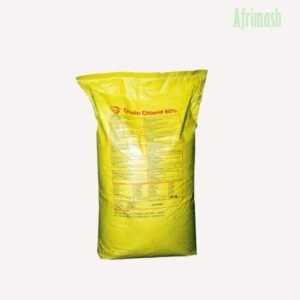 Choline Chloride Feed Additive 60% Choline chloride feed additive is used as an important feed additive in animal species, especially chickens. Choline- chemically known as 2-hydroxyethyl-trimethyl ammonium hydroxide and is referred to as vitamin B4. It has recently been claimed as a rediscovered vitamin & performance promoter in poultry. The role of choline in the prevention of conditions such as perosis and liver enlargement in chicks is already well known. The main function of choline is to act as a lipotropic agent and prevents the abnormal fatty infiltration in the liver (Fatty Liver Syndrome) thus ensures proper metabolism of the body & effective utilization of the nutrients. The young chicken needs choline more due to the inability to synthesize at a sufficient rate. Females are less susceptible to choline deficiency, without an exact clear mechanism. Egg contains 12-13 mg choline per gram dried whole egg mass. Roles of choline chloride feed additive in poultry Prevention of abnormal fat accumulation (fatty liver) Prevention of perosis/chondrodystrophy which is an anatomic deformation of leg bones in young chickens, turkey poults, and pheasant poults etc. Enhancing maximum egg production Choline is a metabolic essential for building and maintaining cell structure Choline is essential for the synthesis of acetylcholine by mitochondria at the presynaptic terminal of the neural synapse, a substance that makes possible the transmission of nerve impulses. Medication Animal species: Poultry Route of administration: Feed grade choline chloride feed additive Dosage: 100g to 1 ton of feed
Choline Chloride Feed Additive for Livestock ? 60%
₦82,550.00 -
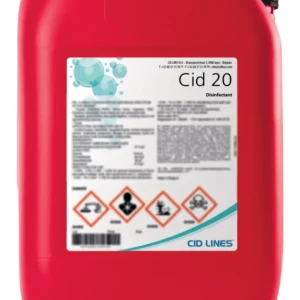 Introduction: Why Farm Hygiene Matters More Than Ever CID 20 ? The Ultimate Agricultural Detergent & Disinfectant for Superior Farm Hygiene; In today?s intensive agricultural operations, maintaining optimal hygiene standards?is no longer optional ? it?s a critical component of?animal health, productivity, and food safety. Pathogens like?E. coli,?Salmonella, and mastitis-causing bacteria can devastate livestock operations, leading to?reduced milk yields, increased veterinary costs, and potential regulatory issues. CID 20?represents a breakthrough in agricultural cleaning technology ? a?highly alkaline detergent and disinfectant?specifically engineered to meet the unique challenges of modern farming. Unlike conventional products that require separate cleaning and disinfection steps, CID 20 delivers?complete microbial control and organic matter removal in a single application, saving time, labor, and water while providing?unmatched protection against disease transmission. Developed by?CID LINES, a global leader in hygiene solutions, this formulation combines?scientific innovation with practical farm experience?to create what many agricultural professionals consider the?gold standard in livestock facility sanitation. The Science Behind CID 20: How It Works Advanced Alkaline Chemistry CID 20?s powerful formula operates on multiple levels: Protein Denaturation:?The high pH (approximately 12-13) breaks down complex proteins found in milk, blood, and organic matter Fat Saponification:?Converts stubborn fats and greases into water-soluble compounds Microbial Membrane Disruption: Destroys the cell walls of bacteria and viruses Biofilm Penetration:?Special surfactants reach deep into protective microbial layers Validated Efficacy Against Agricultural Pathogens Independent laboratory testing confirms CID 20 ? The Ultimate Agricultural Detergent & Disinfectant for Superior Farm Hygiene?s effectiveness against: Mastitis pathogens:?Staphylococcus aureus,?Streptococcus agalactiae,?E. coli Zoonotic threats:?Salmonella?spp.,?Campylobacter,?Listeria monocytogenes Viruses:?Porcine epidemic diarrhea virus (PEDV), avian influenza Fungi:?Aspergillus,?Candida?species Comprehensive Application Guide? Dairy Farm Applications; Milking Equipment Sanitation Pre-milking preparation:?0.5% solution for teat dipping (check local regulations) Post-milking CIP:?1-2% solution at 55-60?C (131-140?F) for 7-10 minute cycle Bulk tank cleaning: 2% solution with 15-minute contact time Parlor Hygiene Protocol Pre-rinse?with 35-40?C water (95-104?F) Circulate?1.5% CID 20 solution for 10 minutes at 60?C (140?F) Final rinse?with sanitized water Weekly acid wash?to prevent mineral buildup (alternate with CID 20) Livestock Housing Management Poultry Operations Between flocks:?3% solution applied via foam or pressure washer Drinking lines:?1% solution circulated for 30 minutes weekly Egg handling equipment: 1.5% solution with 5-minute contact time Swine Facilities Farrowing crates:?2% solution after power washing Feeding systems:?1% solution in automated cleaning cycles Transport vehicles: 3% solution with 10-minute contact time Specialty Applications Milk replacer equipment:?1% solution prevents bacterial contamination Calf housing:?2% solution between occupants reduces scours transmission Biosecurity foot baths: 2% solution refreshed daily Technical Specifications & Safety Data Physical Properties Parameter Specification Appearance Clear yellow liquid pH (1% solution) 12.5-13.2 Density (20?C) 1.10-1.15 g/cm? Freezing point -5?C (23?F) Solubility Fully miscible in water Dilution Guidelines Application Concentration Contact Time Temperature Routine cleaning 0.5-1% 5-10 min 20-30?C Heavy soiling 2-3% 10-15 min 40-60?C Biofilm removal 3% 15-20 min 60-75?C Disinfection 1-2% 10 min 20?C+ Safety & Handling Storage:?Keep in original container between 5-30?C (41-86?F) Shelf life:?24 months unopened, 6 months after opening PPE requirements:?Nitrile gloves, face shield, rubber boots First aid measures:?Flush eyes/skin with water for 15 minutes if contacted Comparison With Alternative Products Feature CID 20 Chlorine QACs Peracetic Acid Organic Matter Tolerance Excellent Poor Fair Good Biofilm Removal Yes No No Limited Material Compatibility High Low High Medium Temperature Stability Up to 80?C <40?C <50?C <40?C Residual Activity 12-24 hours None 3-6 hours None Environmental Impact Biodegradable Toxic byproducts Persistent Breaks down rapidly Frequently Asked Questions Q: Can CID 20 ? The Ultimate Agricultural Detergent & Disinfectant for Superior Farm Hygiene replace acid washing in dairies? A: While CID 20 handles organic cleaning excellently, periodic acid washing (every 7-10 days) remains necessary for mineral scale removal. Q: Is it safe for automatic drinker systems? A: Yes, at 1% concentration with thorough rinsing. Monitor animals initially for any water intake changes. Q: How does it perform in hard water? A: CID 20 contains sequestrants that maintain efficacy up to 30?dH water hardness.
CID 20 ? The Ultimate Agricultural Detergent & Disinfectant for Superior Farm Hygiene
₦807,300.00 -
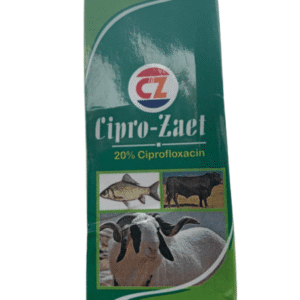 Cipro-Zaet Ciprozaet is a specially formulated, 20% ciprofloxacin-based, active, broad-spectrum antibiotic. Key features of this product Ciprozaet is a highly effective combination of broad-spectrum antibiotics and ciprofloxacin. It is available in 100ml and 1 litre. 100 ml costs 800 and 1000ml costs 7500. It acts as a bacteriostatic against many Gram-positive and Gram-negative bacteria like Bordetella, Chlamydia, E. coli, Haemophilus, Mycoplasma, Rickettsia, Salmonella, Staphylococcus and Streptococcus spp. It is essential for the proper operation of numerous physiological functions. This product stimulates egg production and increases growth. It also improves feed conversion and is used as a vitamin supplement during periods of disease and stress. It is ciprofloxacin formulated and a water-soluble veterinary-medicine biotic. It inhibits toxoplasma and other protozoal agents such as coccidia. It is suitable for broilers, broiler breeders, fish replacement pullets, turkeys, ducks, and pigeons. Benefits of Cipro-Zaet Cipro-Zaet helps preserve and maintain healthy epithelial tissues and mucous membranes. It boosts immunity. This product assists the animal in counteracting intestinal haemorrhages and lesions caused directly by the pathogen or the parasite. It improves growth performances in pigs, poultry,?and calves. It works against vitamin deficiency during and after farm?stress situations. It enhances weight gain and also maintains the healthy condition of the animals. Animals are protected from suffering from dehydration because it helps in retaining body fluid. This product is safe to use in chicks and it lengthens the life span of animals. It controls and prevents bacterial diarrhoea. Cipro-Zaet excels in its function in preventing poultry and livestock from contracting bacterial infections. The use of antibiotics in feed has proved to be essential from time to time for improving feed conversion, egg production and weight gain in broilers. Quick delivery is assured immediately after purchase. Order/Purchase of this product in large quantities attracts discount. Send in your order now!
Cipro-Zaet
₦0.00 -
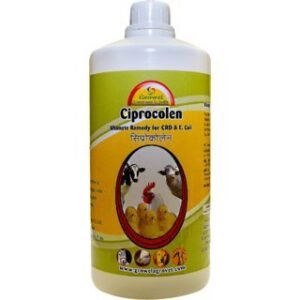 Ciprocolen comes in a smooth powder form. It has a white or medium yellow colour, following dissolution into a bright yellow solution with opalescence How it is administered and its dosage A solvent is formulated from the powder before the medication is used. For this reason, 100 ml of room temperature drinking water is poured into the powdered drug and shaken vigorously until the powder is fully dissolved. The required volume of the resulting solution shall be prepared with a dosing syringe. The resultant solution is given orally to the animals such as poultry, cattle, goats, sheep and more at doses of 1 ml per 1 kg of animal body weight once daily. The time frame for this form of administration is between 3-5 days. Note: Before any subsequent usage, the drug should be vigorously shaken for proper dissolution. Precautions associated with using Ciprocolen Not approved for use with: Young ones of farm animals before the end of the growing cycle due to the possibility of cartilage damage; Animals with serious cartilage growth disorders; Animals with nervous system lesions, which are followed by seizures; Women during pregnancy and those lactating. Animals with human hypersensitivity. Presentation It comes in 100 ml. The shelf life of Ciprocolen It has a shelf life of 36 months prior to use. How to store Ciprocolen Keep safe in cool, room temperature of around 5? Celsius to 25? Celsius. This drug should be out of sight of youngsters. The shelf life is 7 days after dilution. Suitable for: Poultry Cattle Pigs Rabbits Sheep Goats
Ciprocolen | Vanguard Pharmacy
₦0.00 -
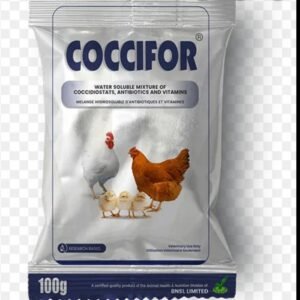 COCCIFOR is an anti-coccidial formulation indicated for eradicating coccidiosis and other bacterial infections within a very short period of time. Composition per 100g of Coccifor CONTENTS UNIT COMPOSITION PER 100g SULFADIMIDINE SODIUM mg 20,000.00 SULFAQUINOXALINE SODIUM mg 4, 000.00 DIAVERIDINE HCL mg 2,000.00 TETRACYCLINE HCL mg 1,000.00 VITAMIN A i.u 800,000.00 VITAMIN K3 mg 500.00 Indications Prevention and treatment of intestinal and caecal coccidiosis, thus by extension; necrotic enteritis. For the prevention and treatment of infections caused by gram-positive and gram-negative bacteria. These include Pullorum disease, Fowl Typhoid, Intestinal infections, Omphalitis etc. Vitamin deficiency pre- and post stress period. Prevention and treatment of enteritis in piglets. Indicated for the prophylaxis and treatment of intestinal coccidiosis in rabbits. Dosage and administration For preventive purposes Broilers: 0.5g per liter of drinking water for 3 days Layers:?0.5g per liter of drinking water for 2 days; withdraw for 1 day then administer the following day. Treatment Broilers:?1.0g per liter of drinking water for 3 days Layers:?1.0g per liter of drinking water for 2 days; withdraw for 1 day then administer the following day. Withdrawal period: Meat ? 10 Days Eggs ? 10 Days SHELF LIFE AT 250C:?1 year (12 months)
COCCIFOR (Coccidiostats, Antibiotics and Vitamins)
₦0.00 -
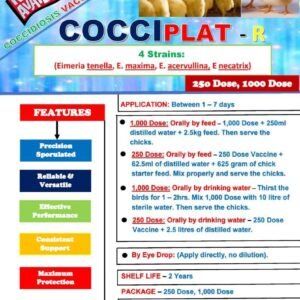 COCCIPLAT-R Coccidiosis Vaccine ? Maximum Protection for Poultry Health COCCIPLAT-R is a highly effective Coccidiosis Vaccine designed to provide broad-spectrum protection against multiple strains of Eimeria in poultry, including Eimeria tenella, E. maxima, E. acervulina, and E. necatrix. With its precision-sporulated formula, COCCIPLAT-R ensures strong immunity in chicks, offering farmers a reliable solution to combat coccidiosis, a common and harmful parasitic disease affecting the intestinal tracts of poultry. Coccidiosis can cause significant losses in poultry farming due to poor weight gain, reduced feed conversion, and increased mortality. COCCIPLAT-R not only helps prevent outbreaks but also supports the overall health and performance of your flock, ensuring maximum productivity and profitability. Key Features of COCCIPLAT-R Coccidiosis Vaccine ? Broad-Spectrum Protection ? Targets four major Eimeria strains responsible for coccidiosis outbreaks in poultry. ? Flexible Application Methods ? Administered orally via feed, drinking water, or eye drops, offering flexibility to suit your farm?s needs. ? Early Immunity Development ? Recommended for chicks between 1-7 days old for early protection and robust immunity. ? Precision-Sporulated Formula ? Ensures consistent and effective vaccination results, reducing the risk of coccidiosis outbreaks. ? Reliable and Versatile ? Suitable for various poultry farming operations, from small-scale farms to large commercial operations. Application and Dosage Instructions Oral Application via Feed 1,000 Dose: Mix 1,000 doses with 250ml of distilled water and 2.5kg of chick starter feed. Blend thoroughly and serve to chicks. 250 Dose: Combine 250 doses with 62.5ml of distilled water and 625g of feed. Mix well and administer to chicks. Oral Application via Drinking Water 1,000 Dose: Thirst chicks for 1-2 hours before administering. Mix 1,000 doses with 10 liters of sterile water and provide to the birds. 250 Dose: Mix 250 doses with 2.5 liters of distilled water and offer to the chicks. Eye Drop Application (Maximum Protection) Apply the vaccine directly via eye drops without dilution for the most targeted immune response. Packaging & Shelf Life Available in 250 Dose and 1,000 Dose packages to accommodate different flock sizes. Shelf Life: 2 years when stored properly in a cool, dry place. Important Cautions & Post-Vaccination Care Do not use any coccidiostat drugs after vaccination, as they can interfere with the vaccine?s effectiveness. Ensure proper brooding space to allow for healthy chick development and vaccine cycling. Avoid packing litter until 3-4 weeks post-vaccination to support the natural cycling of the vaccine and the development of immunity. Why Choose COCCIPLAT-R Coccidiosis Vaccine? ? Proven Effectiveness ? Trusted by poultry farmers for its consistent performance and reliable protection. ? Versatile Administration ? Multiple application options make it easy to integrate into any poultry management routine. ? Cost-Effective Solution ? Prevents costly outbreaks, ensuring better growth rates, feed conversion, and reduced mortality. ? Safe and Scientifically Tested ? Developed to provide strong immunity with minimal risk to your flock. Order COCCIPLAT-R Coccidiosis Vaccine Today! Ensure the health and productivity of your flock with the COCCIPLAT-R Coccidiosis Vaccine. By protecting against major Eimeria strains, COCCIPLAT-R helps maintain optimal flock performance while reducing the risk of disease outbreaks. With flexible application options and proven results, COCCIPLAT-R is the trusted choice for poultry farmers looking to safeguard their investments. Get COCCIPLAT-R now for healthier, stronger, and coccidiosis-free poultry!
COCCIPLAT-R Coccidiosis Vaccine (Large Dose Vial |250 | 1000 ) + Transport Flask
₦13,650.00 -
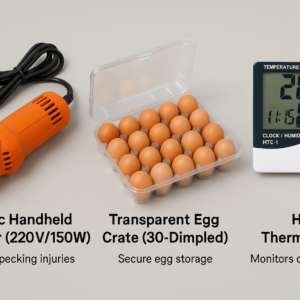 Poultry Egg Production Essentials Combo Ensure a smooth and efficient egg production process with these three essential tools. This combo helps keep your chickens healthy, your eggs safe, and your coop at the right temperature for maximum productivity. 1. Electric Handheld Debeaker (220V/150W)? (A Poultry Egg Production Essential) This tool is used to carefully trim the beaks of chickens to prevent pecking injuries and reduce aggressive behavior in the flock. A debeaked bird is less likely to harm others, leading to healthier and more productive hens. Works on 220V power with 150W heating?? Provides a quick, clean cut to minimize stress. Safe and precise?? Reduces bleeding and infection risks compared to manual methods. Best for small to medium farms?? An affordable way to maintain a peaceful flock. Why it?s important:?Chickens naturally peck at each other, which can lead to injuries, infections, and even death. Debeaking helps prevent this problem. 2. Transparent Egg Crate (30-Dimpled) This sturdy plastic crate holds up to 30 eggs securely, preventing cracks and damage during collection and transport. Clear design?? Lets you easily check eggs without removing them. Sturdy and stackable?? Saves space and keeps eggs organized. Reusable and easy to clean?? Made from durable plastic for long-term use. Why it?s important:?Eggs can easily break if not stored properly. This crate keeps them safe and makes handling more efficient. 3. HTC Thermometer? (A Vital Poultry Egg Production Essential) Maintaining the right temperature in your chicken coop is crucial for egg production. This thermometer helps you monitor conditions to keep your hens comfortable. Accurate readings?? Ensures the coop is not too hot or too cold. Easy to read?? Simple display for quick temperature checks. Built to last?? Designed for farm use. Why it?s important:?Extreme temperatures can stress chickens, reducing egg-laying rates. A well-regulated coop means healthier hens and better production. Benefits of This Combo By using these three tools together, you can: Reduce injuries and stress?in your flock with proper debeaking. Keep eggs safe and organized?with durable storage crates. Maintain ideal coop conditions?for consistent egg production. This combo is perfect for small to medium poultry farms looking to improve efficiency and bird welfare. Interested? Contact us for pricing and availability!?Fast shipping options are available. Upgrade your poultry farm today?healthy chickens mean more eggs!
Combo: Poultry Egg Production Essentials (Electric Handheld Debeaker (220V/150W) + Transparent Egg Crate 30-Dimpled+ HTC Thermometer)
₦0.00 -
 Broiler Breeder Premix Constituents Our concentrate/premix is specially fortified with the following in homogenous proportion Organic acid (Citric acid and Orthophosphoric acid) Inhibits pathogenic colonization in the gut and improve non-specific immunity, leading to higher growth in poultry birds. It also enhances calcium and phosphorus absorption in layers and broilers. resulting in better eggshell quality and reduced use of mineral phosphates. These organic acids also serve as preservatives to prevent the degradation of the concentrate. Enzymes Highly enriched with various enzymes which makes necessary nutrients accessible to the birds. These enzymes increase proper digestibility of feed resulting in enhanced growth and productivity in poultry. Toxin binders MiaRadOx: Helps to prevent feed degradation. MiaBond and Bentonite: Binds toxins and controls mycotoxicosis, thereby making it safe to include mycotoxin prone ingredients like GNC in poultry feed. Minerals, vitamins and trace elements This premix is highly cost-effective and offers farmers a complete nutritional solution with maximum economic value. The Agricare premixes and concentrates are available for all poultry categories. The use of concentrates offers the farmers control over a wide range of ingredients such as maize, protein cakes, offals, bone meal, and limestone. This range is widely appreciated for its optimum quality, hygienic processing, and easily digestible nature. It contains all micro-ingredients and proteins in a well-mixed concentrate. In addition, it optimizes the performance and persistence of broiler with high peak-performance and production. Specially formulated and uniquely enriched with performance-enhancing additives for making broiler feed. High feed to meat conversion ratio/high feed utilization.Application Rate: Mix 2.5 kg of the product to 1 ton of feed.
Commercial Broiler+Broiler Breeder Premix (Agricare Brand) ? (2.5 kg |25Kg Bags)
₦14,950.00 -
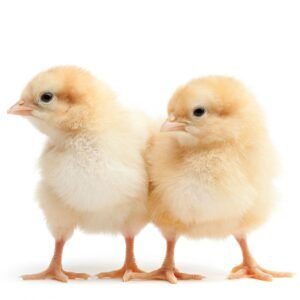 The ISA Brown chicks lay up to 300 brown eggs per year and weight up to 2 kg at maturity. It is also a good second-year bird (they can lay up to 500 eggs over 2 years). It is also a good source of delicious meat (Old layers) which is a major crave for old layer meat consumers. Although it was mainly developed as a battery bird (performs better in battery cages), it is a very adaptive bird which can be kept free range and in the deep litter style. It adapts well to various climates and conditions. It also has a very excellent feed conversion ration (2:1), making it a very profitable and cost-effective poultry bird to raise. Note Before leaving the point of delivery, please count your birds while the driver is still there. Once you ensure the driver or delivery agent witnesses any loss, and you confirm this with us. you will be compensated once we confirm/corroborate the loss/inconsistency at delivery. Allschoolabs Farms does not provide any warranty or guarantee on day-old chicks or poults- Scheduled for delivery to extremely distant locations. Which experience mortalities on arrival at farms and onwards We advise the services of qualified veterinarians for routine observation and treatment (and consult the vaccination and medication schedule offered to you) Kindly be informed our day-old chicks prices are updated twice weekly based on the prevailing market rates. Kindly review available options here?and place your orders or confirm with our Customer Experience Team via LiveChat or phone call on 08094091115
Commercial Day Old Pullet ? ISA Brown (Farm Support Brand | Pre-Order)
₦0.00 -
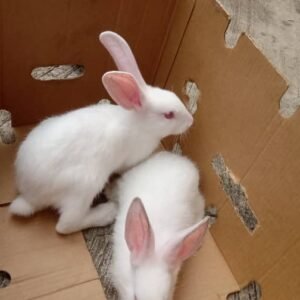 Commercial Rabbits (Hyla breed) Hyla rabbit is a genetically modified broiler rabbit bred to have fast growth and reach a table size within 3 months (2kg) It is pure white with pink eyes. Common Hyla breeds in Nigeria are hybrid cross products between Hyla max and hyla Ng breeds.. Hylas. once fully grown can have a plump, company body type. This breed also has erect ears which should not exceed five inches in length. Should your rabbit?s fur become stained, never give them a bath- instead, spot-clean them with a damp cloth. Grooming should be done bi-weekly during off-molting seasons and weekly when their molts are in full swing. Care Requirements Indoor enclosures need to be large enough for your rabbit to comfortably stretch out to its full length, plus have room leftover. These enclosures need to be made of wire and should have a solid bottom made of either metal or plastic in order for bedding to be placed. This bedding needs to be spot-cleaned for cleanliness every day and completely replaced at the end of every week. Health Standard rabbits are susceptible to problems such as overgrown teeth, flystrike, and ear mites. Rabbit owners need to check their rabbit?s ears every 2-3 weeks for mites. Rabbit Breeds Selection of prime stock is the initial and most basic step toward the success or failure of a rabbit operation. Naturally, an animal?s appearance will play a major factor in the process of selection. Other essential requirements are health, vigor, longevity, ability to reproduce, and desirable type and conformation. Rabbit Management Rabbit can be fed with pellets, grasses like elephant grass, fresh maize and leaves, lettuce, cabbage potatoes and leaves, carrots, dried cassava peels, yam peels, banana, and leaves. Simple food formation includes: Maize bran, groundnuts, millets or wheat, and alfalfa?all properly mixed together. ALso, you can purchase the ready formulated Bella Rabbit Feed for mature and weaner rabbits. Pellets are preferable to mashes because the rabbits waste less (they are unable to paw them out of the crocks as easily). Also, they are not dusty so they won?t irritate the nose and lungs. If you must use a mash, you can avoid the crustiness and reduce some waste by adding just enough water to slightly moisten the feed. However, beware of giving too much-moistened feed to the rabbit or leaving it in the pen too long as it will sour and the rabbit will not eat it, causing further waste. In the low lands where fermentation is more prevalent, give the rabbits only enough concentrates to be consumed within a 10- to the 15-minute time span.
Commercial Hyla Rabbits (Broiler Rabbit Breed | 3 Females + 2 Males)
₦0.00 -
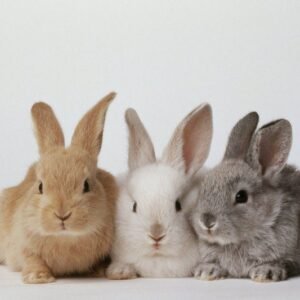 Commercial Rabbits (Chinchilla breed) Pure breed Colony of Five rabbits composed of three females and two males ready for production. We deliver Nationwide. Package delivered with free-feeding history and best-recommended feeds for rapid growth. Overall Description Chinchillas. once fully grown can have a plump, company body type. This breed also has erect ears which should not exceed five inches in length. The Standard Chinchilla has soft, rollback fur which , like most short-to-medium haired rabbits, do not require much grooming in order to keep it in show-worthy condition. Should your rabbit?s fur become stained, never give them a bath- instead, spot-clean them with a damp cloth. Grooming should be done bi-weekly during off-molting seasons and weekly when their molts are in full swing. The Chinchilla rabbit is known to be sweet, docile creatures who have no problem being picked up by their owners or strangers. Care Requirements Indoor enclosures need to be large enough for your rabbit to comfortably stretch out to its full length, plus have room leftover. These enclosures need to be made of wire and should have a solid bottom made of either metal or plastic in order for bedding to be placed. This bedding needs to be spot-cleaned for cleanliness every day and completely replaced at the end of every week. Health Standard Chinchillas are susceptible to problems such as overgrown teeth, flystrike, and ear mites. Rabbit owners need to check their rabbit?s ears every 2-3 weeks for mites. Rabbit Breeds Selection of prime stock is the initial and most basic step toward the success or failure of a rabbit operation. Naturally, an animal?s appearance will play a major factor in the process of selection. Other essential requirements are health, vigor, longevity, ability to reproduce, and desirable type and conformation. Medium and large breeds, such as New Zealand, California, Dutch Gray, English Spot, Chinchilla, and Flemish Giant, have the most suitable size and conformation for producing meat and fur. White breeds of rabbits (e.g., New Zealand White and Californian) are the most prolific and the most desirable for commercial and fur production because white skins usually bring higher prices. Rabbit Management Rabbit can be fed with pellets, grasses like elephant grass, fresh maize and leaves, lettuce, cabbage potatoes and leaves, carrots, dried cassava peels, yam peels, banana, and leaves. Simple food formation includes: Maize bran, groundnuts, millets or wheat, and alfalfa?all properly mixed together. Our weaners are always given recommended medications at four weeks old (anti-biotics and multivitamins) and these should be repeated every four weeks. However, overall, the primary criterion remains the rabbit?s records. It is vitally important to study records on family production, hereditary factors, size of animals, growth potential, etc. Therefore, purchase your foundation stock from a reliable and established rabbitry that keeps such records. Pellets are preferable to mashes because the rabbits waste less (they are unable to paw them out of the crocks as easily). Also, they are not dusty so they won?t irritate the nose and lungs. If you must use a mash, you can avoid the crustiness and reduce some waste by adding just enough water to slightly moisten the feed. However, beware of giving too much-moistened feed to the rabbit or leaving it in the pen too long as it will sour and the rabbit will not eat it, causing further waste. In the low lands where fermentation is more prevalent, give the rabbits only enough concentrates to be consumed within a 10- to the 15-minute time span.
Commercial Rabbits (Pure Breed Chinchillas | 3 Females + 2 Males)
₦58,500.00 -
Commercial Rabbits Rabbit New Zealand Pure breed Colony of Five. New Zealand White, red, or black Three Females and Two males ready for production. We deliver Nationwide. Package delivered with free-feeding history and best-recommended feeds for rapid growth. Rabbit Breeds Selection of prime stock is the initial and most basic step toward the success or failure of a rabbit operation. Naturally, an animal?s appearance will play a major factor in the process of selection. Other essential requirements are health, vigor, longevity, ability to reproduce, and desirable type and conformation. Medium and large breeds, such as New Zealand, California, Dutch Gray, English Spot, Chinchilla, and Flemish Giant, have the most suitable size and conformation for producing meat and fur. White breeds of rabbits (e.g., New Zealand White and Californian) are the most prolific and the most desirable for commercial and fur production because white skins usually bring higher prices. Rabbit Management Rabbit can be fed with pellets, grasses like elephant grass, fresh maize and leaves, lettuce, cabbage potatoes and leaves, carrots, dried cassava peels, yam peels, banana, and leaves. Simple food formation includes: Maize bran, groundnuts, millets or wheat, and alfalfa?all properly mixed together. Our weaners are always given recommended medications at four weeks old (anti-biotics and multivitamins) and these should be repeated every four weeks. However, overall, the primary criterion remains the rabbit?s records. It is vitally important to study records on family production, hereditary factors, size of animals, growth potential, etc. Therefore, purchase your foundation stock from a reliable and established rabbitry that keeps such records. Pellets are preferable to mashes because the rabbits waste less (they are unable to paw them out of the crocks as easily). Also, they are not dusty so they won?t irritate the nose and lungs. If you must use a mash, you can avoid the crustiness and reduce some waste by adding just enough water to slightly moisten the feed. However, beware of giving too much-moistened feed to the rabbit or leaving it in the pen too long as it will sour and the rabbit will not eat it, causing further waste. In the low lands where fermentation is more prevalent, give the rabbits only enough concentrates to be consumed within a 10- to the 15-minute time span.
Commercial Rabbits (Pure Breed New Zealand White | 3 Females + 2 Males)
₦84,500.00 -
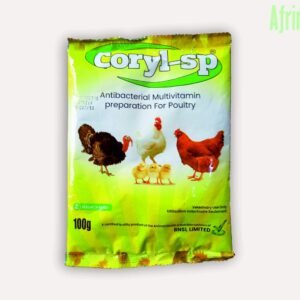 CORYL SP helps in the prevention and treatment of poultry from disease such as C.R.D. (Chronic Respiratory Disease), coryza, gastrointestinal infections, colibacillosis, salmonellosis. Composition: WATER SOLUBLE POWDER UNIT COMPOSITION PER 100g ERYTHROMYCIN mg 3,000.00 CHLORTETRACYCLINE mg 5,000.00 NEOMYCIN mg 2,000.00 STREPTOMYCIN mg 2,000.00 VITAMIN A iu 400,000.00 VITAMIN D3 iu 80,000.00 VITAMIN E iu 200.00 VITAMIN K3 mg 200.00 VITAMIN B1 mg 100.00 VITAMIN B2 mg 200.00 VITAMIN C mg 1, 800.00 NIACIN mg 2,000.00 D-PANTOTHENATE mg 500.00 VITAMIN B6 mg 100.00 Indications: C.R.D. (Chronic Respiratory Disease), Coryza, Gastro-intestinal infections, Colibacillosis, Salmonellosis, pullorosis. Dosage and Administration: Prevention: 0.5g per liter of drinking water for 5-7days Treatment: 1g per liter of drinking water for 5-7days. Shelf life at?250c: 18months
Coryl Sp ? Antibiotic/Multivitamin for Poultry
₦75,400.00 -
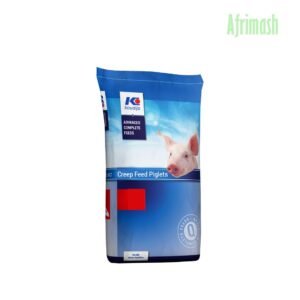 Creep Feed for Piglets We offer Creep Feed (for piglet) produced in Nigeria by Terratiga in collaboration with Koudijs Animal Nutrition B.V. While there is no ?standard diet? regarding feeds in pig production, Terratiga is committed to producing the right nutritional requirements of your piglets. The feed is suitable for piglets and weaners till 12kg bodyweight. Using our feeds, we are confident that your pigs will experience a boost of early growth performance. Our creep feeds are easy to use and you will require no mixing equipment for application. ? Creep Feeding Creep feeding is the practice of introducing solid feeds to pigs before they are weaned. The primary reasons for creep feeding pigs are: To supplement pre-weaned piglets with a solid diet while they are suckling To create eaters at weaning How does creep feeding work? Creep feeding eases the transition from sow?s milk to solid pig starter feed. When a pig eats creep, it stimulates the digestive system to produce amylase, an enzyme that digests the carbohydrates in dry feed. This helps the pig prepare for optimal nutrient digestion when he/ she is ready for pre-starter and starter diets. If a pig is better able to digest dry feed, he can start eating quickly post-weaning for better performance in the nursery and beyond. To realize the many?benefits of creep feeding, you need to be doing it correctly. Here are nine best practices for creep feeding. Use them as a tool to train new employees and help experienced employees remain consistent. Tips for successful creep feeding Store creep feed in a dry, fresh place and keep the bags or containers closed. Start by offering small amounts of pig creep feed; increase the amount fed as intake increases. Do not overfeed and endeavor to remove abandoned feed. Piglets are social creatures. Place creep feed on mats to encourage them to eat in groups. Keep creep feed out of the sow?s reach when placing it for pigs. Offer piglets creep feed when the sow is awake and eating so the pigs are less likely to be suckling. Place creep feed in the piglets? comfort zone; avoid placing it below a heat source, near water sources or in pen corners. Offer creep feed two to three times a day to allow piglets optimal access to creep feed. Ensure weaning pigs have access to water at all times. You might need to show the piglets where to find waterers. Choose a highly palatable creep feed to entice the young pigs to get up and eat. And for this, our premium Creep Feed for Piglets has got you covered. ? Environmental Control For Optimized Growth To maximize feed intake, a number of other factors need to be considered. These include temperature & environmental control, adequate supply of water, and sanitation control programs. Temperature: Pig temperature requirements are important to growth and production. Pigs are highly adaptable animals and can perform well within a range of temperatures. However, temperatures too low or too high can have adverse effects on the stock. If, for example, temperatures are too cold, a pig will feed more but expend more energy to stay warm, resulting in slow growth. Hot weather can lead to heat stress and reduce feed consumption (and can possibly lead to death), so it is important to?keep livestock cool in summer. Consequently, growth and maturity rates slow down, conception rates fall, and pig flow is reduced, disrupting stock levels. Depending on the season, keep buildings well-ventilated or heated, and provide adequate air space within the pen to ensure pig growth and production rates are maintained. Water: Provide lots of fresh, clean water. Water is the central part of a pig?s diet. One-half to two-thirds of its body weight is water. Access to clean drinking water is essential to a pig?s growth rate. Newly weaned pigs are especially prone to dehydration. Pigs must have water readily accessible for drinking throughout the day to maintain proper hydration. Sanitation: You should endeavor to implement sanitation protocols on your farm. Poor sanitation can lead to undetected disease challenges that reduce food intake. Properly designed feeders will encourage maximum feed intake.
Creep Feed (for Piglets | 25kg Feed | Terratiga)
₦59,800.00 -
 Crown Broilers (Abor Acre Plus) ? Premium Abor Acre Plus Broilers for Fast Growth, High Meat Yield & Profitability If you are looking for high-quality broiler chickens that grow fast, convert feed efficiently, and produce excellent meat yield, Crown Broilers (Abor Acre Plus)?is the perfect choice. These broilers are an Abor Acre Plus breed, known for their rapid weight gain, superior feed conversion ratio (FCR), and strong disease resistance. Whether you are a commercial poultry farmer or a small-scale grower, Ajila Broilers offers high profitability and reliable performance, making them one of the most sought-after broiler breeds in Nigeria. Why Choose Crown Broilers (Abor Acre Plus)? 1. Fast Growth Rate for Quick Market Readiness Crown Broilers reach market weight in just 6 to 8 weeks, making them ideal for farmers looking to achieve a quick turnaround and higher profitability. With proper feeding and management, these broilers can attain an average weight of 2.5 to 3.5 kg in a short period, ensuring a steady income stream for farmers. 2. Excellent Meat Yield with High Dressing Percentage The Abor Acre Plus breed is known for its high breast meat yield and uniform growth. These birds have a well-balanced body structure that maximizes meat production, making them highly desirable for both fresh poultry markets and processed meat industries. With Crown Broilers, you can be assured of plump, tender, and juicy meat that meets consumer demand. 3. Superior Feed Efficiency & Cost-Effective Farming One of the biggest challenges in poultry farming is feed cost. Crown Broilers have an optimized feed conversion ratio (FCR), meaning they require less feed to achieve excellent weight gain. This reduces production costs while ensuring high returns on investment for farmers. By maintaining a balanced diet with quality feed, you can maximize profitability without excessive feeding expenses. 4. Strong Disease Resistance & High Survival Rate Crown Broilers are selectively bred for strong immunity and disease resistance, helping farmers minimize losses due to illnesses and infections. They exhibit resilience against common poultry diseases such as Newcastle disease, infectious bronchitis, and coccidiosis. With proper vaccination and management, these broilers experience low mortality rates, ensuring a smooth and successful farming experience. 5. Adaptability to Various Farming Systems Crown Broilers can thrive in different poultry housing systems, including deep litter, battery cage, and free-range setups. Whether you are operating a small farm or a large commercial poultry business, these broilers perform well in diverse environmental conditions. They are highly adaptable to Nigeria?s climate and management practices, making them an excellent choice for farmers across the country. Ideal for Farmers Who Want: ? Broilers that grow fast and reach market size in record time. ? High-yield birds with excellent meat-to-bone ratio. ? Efficient feed conversion that reduces production costs. ? Low mortality rates due to strong disease resistance. ? A profitable poultry business with consistent revenue. Management Tips for Optimal Growth To maximize the performance of Crown Broilers, follow these best practices: ? Provide high-quality starter, grower, and finisher feeds for optimal growth. ? Ensure a clean and well-ventilated environment to reduce disease risks. ? Administer vaccinations and biosecurity measures to protect the flock. ? Supply fresh water at all times to promote healthy metabolism. ? Monitor weight gain and adjust feeding schedules accordingly. By following these guidelines, you can achieve superior growth rates, increased survival rates, and higher profitability. Order Crown Broilers Today for a Profitable Poultry Business! Take your poultry farm to the next level with Crown Broilers (Abor Acre Plus). With fast delivery, expert support, and premium-quality chicks, we ensure that you receive the best broilers for maximum success. Place Your Order Now & Start Growing Profitable Broilers Today!
Crown Broilers (Abor Acre Plus)
₦81,900.00 -
 Cutting machine The cutting machine finds a wide range of application in large, medium and small meat processing plants, canteen, slaughterhouses, large supermarkets etc. It is indicated for the processing of fresh/frozen meat into smaller bits, traces, cubes or strips (duck, goose, fish, ribs, frozen pork, mutton, chilled beef). It has high efficiency and will not produce meat mince, making it a cost-efficient tool in poultry processing. This equipment makes chicken processing easier and allows for enhanced effectiveness on the poultry processing plant. ? Features of the cutting machine Highly designed and articulated parts and motors indicated for cutting meat to smaller parts and bits. Easy to install and operate (high demand in the poultry and meat processing industry). High-efficiency rotor blades with safeguarding. Adjustable pad for reducing vibration?and stability of the machine during utilization. Can be adapted for tabletops, benches and floor use. Cutting machine: Technical parameters Power: 0.75KW Processing capacity: 200kg / h Dimensions: 400 * 540 * 590mm Material: Stainless steel body, alloy steel blade Product weight: 40kg ? Poultry processing Efficient poultry processing requires some very valuable tools/ equipment for desirable end results. The general steps for recommended poultry processing include: Poultry transport to the slaughterhouse ? hook assembly line ? shock/slaughter ? bloodletting ? scalding ? feather-plucking ? evisceration/processing ? washing ? pre-chilling ? cutting ? packing. We have all the processing equipment.
Cutting Machine (For Poultry Processing | Imported | Locally Fabricated)
₦996,053.50
LIVESTOCK SECTION
Shop by Category
 No products in the cart.